

By Janet Byron
Richard Kaner was blown away by Yuzhang Li at an interdepartmental talk over Zoom during the COVID-19 pandemic.
“I heard his seminar and I thought, ‘This guy knows more about batteries than anyone I’ve ever met’,” says Kaner, a UCLA distinguished professor internationally recognized for his work on battery technology.
Kaner got in touch with UCLA assistant professor Li, and the two scientists — one a veteran, the other launching his career — teamed up to take on large-format battery storage, the major impediment to the widespread deployment of renewable energy in power grids.
Li and Kaner are among three research groups pursuing technological solutions to climate-related problems with funding from California Climate Action Seed Grants. Also at UCLA, researchers are helping to find respiratory protection suitable for firefighters working in wildlands and at the wildland-urban interface, where blazes are becoming increasingly common due to climate change. At UC San Diego, researchers are investigating a novel use of hydrogels to help keep increasingly scarce water on small farms. These three projects are among 38 supported by more than $80 million in state funding provided to the University of California for Climate Action projects.

New chemistry for grid-scale batteries
Building on previous research funded by the California NanoSystems Institute at UCLA, Li and Kaner received a $1 million, two-year UC California Climate Action Seed grant to develop grid-scale battery technology based on zinc and vanadium. These two abundant, nontoxic metals are much less expensive and safer than lithium-based batteries.
According to the U.S. Environmental Protection Agency, only about 2% to 5% of the electricity currently generated in the United States is stored. Without more storage, the expansion of intermittent, renewable power sources will make the electrical grid ever more vulnerable to fluctuations in power generation and demand.
“The sun doesn’t shine all the time, and the wind doesn’t blow all the time,” says Kaner, who has joint appointments in the UCLA Departments of Chemistry and Biochemistry, and Materials Science and Engineering. “You need to be able to store that energy.”
Li and Kaner’s rechargeable battery would deploy vanadium oxide in the cathode (positive electrode) and metallic zinc at the anode (negative electrode). They will use a technique called laser-scribed synthesis developed by Kaner to produce a novel vanadium oxide cathode and demonstrate the battery’s effectiveness with a powerful cryogenic electron microscopy (cryo-EM) technique pioneered by Li.
A water-based electrolyte solution would store the electrons that pass between the cathode and anode as electricity. By contrast, current large-scale battery technology relies on lithium, which is “very expensive and not particularly safe,” Kaner says. “It catches on fire and the batteries can explode.”

“Our goal is to develop battery chemistries based on water as the solvent,” making the battery less flammable and easier to recycle, says Li, assistant professor of Chemical and Biomolecular Engineering at UCLA.
In lab experiments, these zinc-ion batteries powered by aqueous chemistry recharged, or cycled, at three times the rate of lithium batteries, meaning they can be charged and discharged much faster. Unpublished results from preliminary work done with the California NanoSystems Institute grant demonstrated “the longest-cycling performance of a vanadium-based cathode that simultaneously exhibits the highest cycling rate and capacity reported to date.”
The Climate Action grant will fund the materials engineering needed to optimize the zinc-based cathode material; evaluate and test large-format batteries with zinc- and vanadium-based chemistry; and pilot-test the refrigerator-sized batteries at microgrid-scale in a planned 75-unit affordable housing complex in Southern California.
Li sees this work as directly in line with the ambitious climate-related goals he has established for his lab: “To understand and develop new (electro)chemical systems that will play a major role in renewable energy, sustainability, and global climate change, all of which represent grand challenges for the 21st century.”
While the preliminary results for zinc- and vanadium-based battery technology are exciting and promising, neither scientist is anywhere close to declaring that the storage problem for renewable energy is close to being solved.
“This is better than anything that we found in the published literature, and we’ve had a few ‘eureka’ moments when we looked at our data,” Li says. “But we both have a healthy skepticism. There’s still a way to go with this technology.”

Hydrogels to aid irrigation on small farms
The San Joaquin Valley, where more than half of the state’s agricultural crops are grown, is a hot, dry environment. In some areas, soils with large proportions of sand are limited in their ability to retain water.
“Even with rain, some water just leaks through and will not be absorbed by the plants,” says Shengqiang Cai, a UC San Diego professor of Mechanical and Aerospace Engineering. Cai has received a $1.7 million, two-year California Climate Action grant to develop and test a soil amendment to help keep water in the top layers of soil where it is available to crops. The plant-based, biodegradable hydrogel Cai has developed could be applied economically at the scale of a small farm.
The technology helps ameliorate a major problem brought on by climate change: less water available for irrigation. For more than a century, San Joaquin Valley agriculture has relied on snowpack from the Sierra Nevada mountains to supply farms and communities in summer.
“With climate change, that system is now being disrupted,” says Ruth Dahlquist-Willard, interim director of the UC Sustainable Agriculture Research and Extension Program. As temperatures continue to rise in the winter, more rain and less snow is falling and the snowpack may melt earlier than expected. “We’re having periods with not enough precipitation and periods with too much precipitation.” In fact, a 2023 Public Policy Institute of California report projects that by 2040, average annual water supplies to the San Joaquin Valley could decline by 20 percent.
The problem of water scarcity falls disproportionately on Southeast Asian, Latino, and Black small farmers, who have less political power to advocate for their water needs compared with larger, industrialized agricultural interests. Yet they contribute a lot to California’s economy. In 2022, Fresno County small farmers grew Southeast Asian specialty crops valued at $25 million on 1,260 acres in the heart of the San Joaquin Valley, where climate change has been making water supplies less reliable for irrigation.
Cai and his collaborators aim to help these historically disadvantaged small farmers to navigate the water-related impacts of climate change. “Could you hold some of that water around the roots of the plants with the hydrogel?” he says. “The hope is that you wouldn’t have to irrigate as often or as much.”
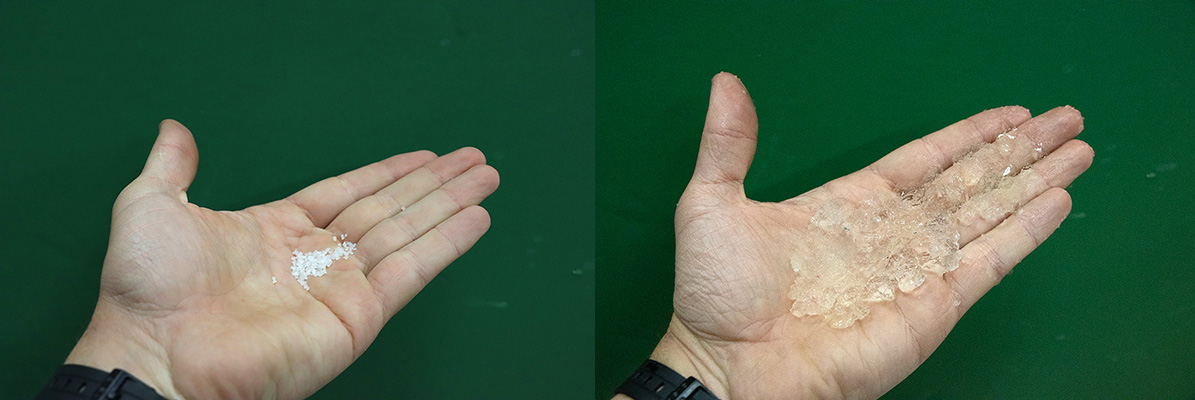
Cai’s research has focused on how soft materials such as hydrogels and rubbery materials called elastomers work. Hydrogels can be obtained when dry polymers imbibe a large amount of water, which allows them to harvest and store water at capacities of up to 100 times their own volume. (Baby diapers, for example, contain synthetic hydrogels.)
The biocompatible hydrogels that Cai’s lab is experimenting with are made from agricultural wastes like pistachio shells and banana peels. These contain large amounts of cellulose that can attract and hold a lot of water. On small farms, the hydrogels would be incorporated into the soil and remain there, helping to retain water for a year or more before naturally breaking down.
“With a hydrogel, we can hold water for a longer time,” Cai says. “We hope these hydrogel particles can be mixed into fertilizer or the soil.”
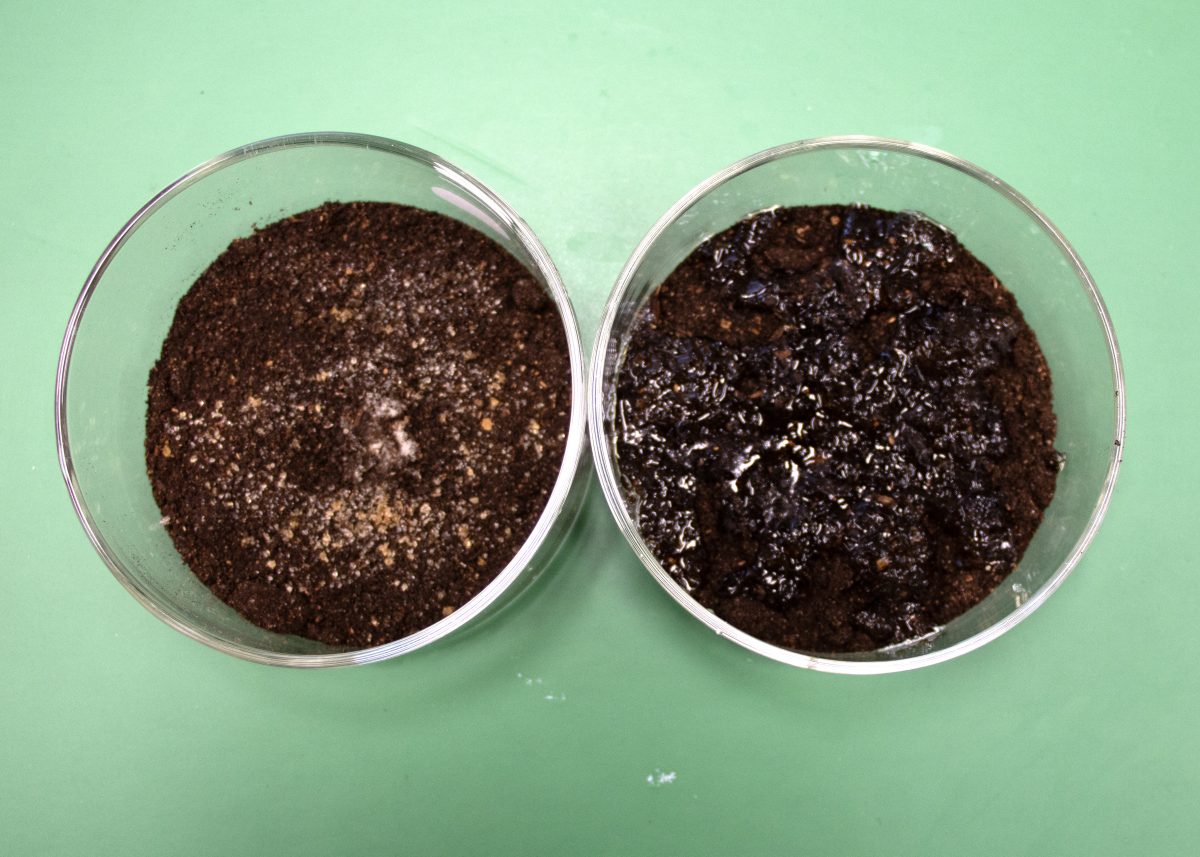
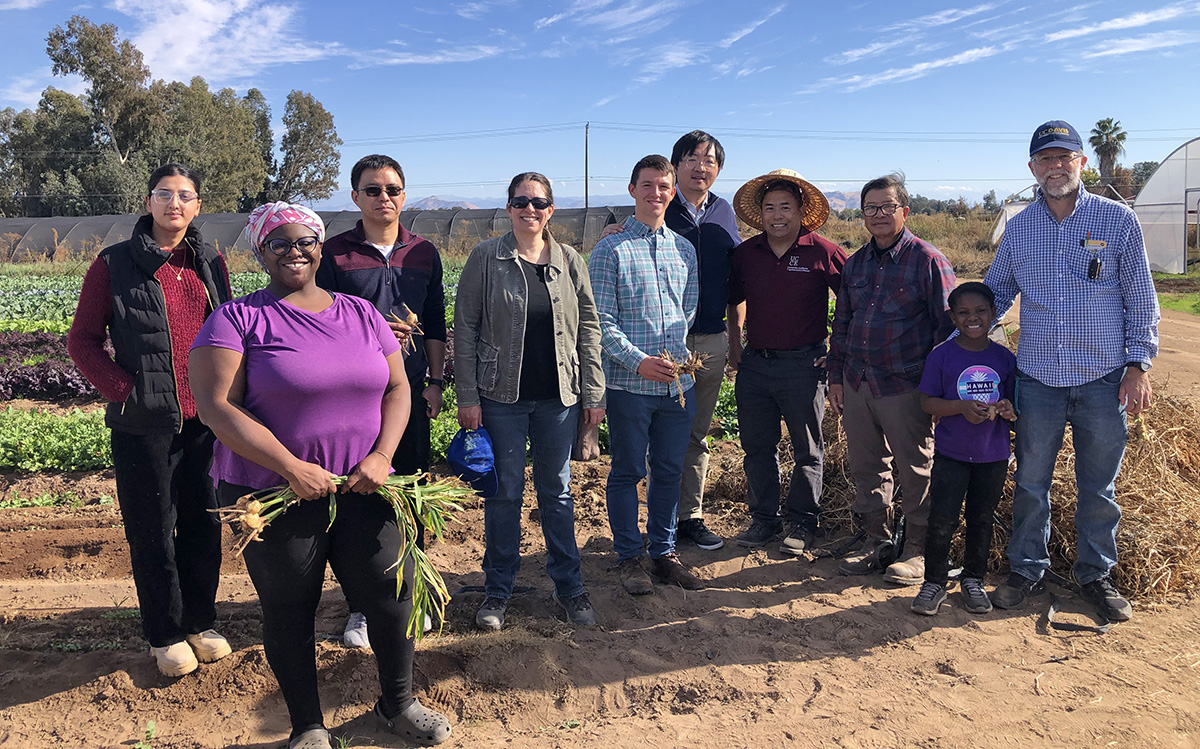
Cai’s lab is evaluating a number of different hydrogels. The best candidates will be tested on plants in greenhouses at UC Davis, then tried out at UC’s Kearney Agricultural Research and Extension Center in Parlier. The researchers have already visited with several small farmers to better understand their farming processes and water needs.
“We’re totally willing to try this,” says Dahlquist-Willard, who previously was UC Cooperative Extension small farms advisor for Fresno and Tulare counties. “We need to consider all the options for how we can use less groundwater and be more efficient with how we irrigate.”
Helping wildland firefighters breathe easier
As Earth’s climate warms, fires in wilderness areas and at the wildland-urban interface — where housing overlaps with natural areas — are becoming increasingly common.
“There’s good evidence that climate change is increasing the frequency and size of wildfires, and so there’s an increased demand for firefighting,” says Rachael Jones, UCLA professor and chair of the UCLA Fielding School of Public Health’s Department of Environmental Health Sciences. “As the population of California has expanded into rural areas — and suburban areas are built in forests — we have more of this wildland-urban interface that is at risk of burning.”
Wildland fires release high levels of smoke, particulates, and toxic chemicals from burning structures into the air, but the firefighters who rush in are not required to wear gear that protects them from these pollutants.
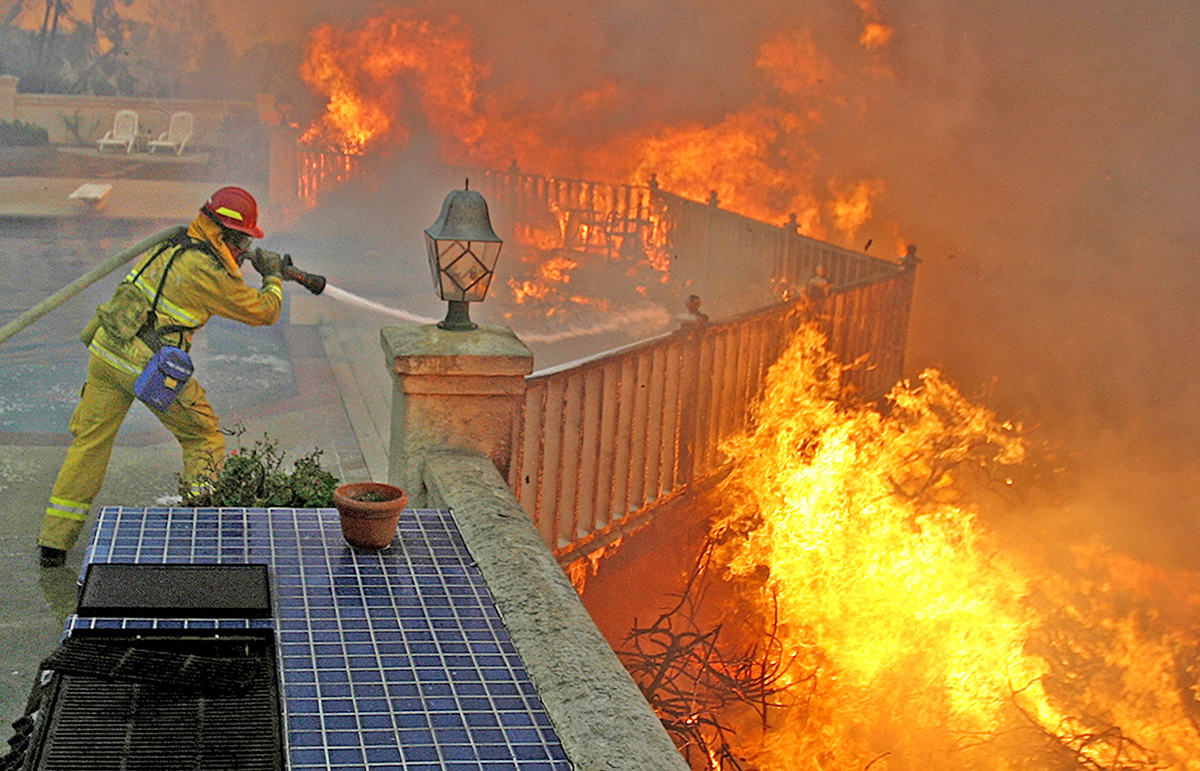
“For fires at the wild-urban interface, the fire service does not have a practice of wearing respiratory protection,” Jones says, even though they’re still getting exposed to toxic combustion byproducts through their lungs and skin. Part of the reason for this practice is that no respiratory protective devices are approved for this work.
Research has shown that exposure to particulates puts wildland firefighters at greatly increased risk of developing several cancers and dying of cardiovascular disease. In 2023, the International Agency for Research on Cancer classified occupational exposure as a firefighter as a known human carcinogen. “The fire service strives to protect the health of their workforce, and this classification is an important recognition that firefighters need effective respiratory protection,” Jones says.
In partnership with the California Division of Occupational Safety and Health (Cal/OSHA), San Jose State University, the Public Health Institute, and Los Angeles County Fire Department, Jones received a two-year, $2 million California Climate Action grant to evaluate the use of powered air-purifying respirators (PAPRs) to protect wildland firefighters.
The research will provide evidence for a Cal/OSHA rulemaking mandated by the state legislature that will require respiratory protection for firefighters in wildlands and at the wildland-urban interface. “This rulemaking is Cal/OSHA’s highest priority for firefighter safety and health,” Cal/OSHA chief Jeff Killip wrote in a letter of support for Jones’s research.
While urban firefighters wear self-contained breathing apparatus (SCBA) when fighting structural and vehicle fires, these devices are impractical in wildland areas because of their weight and bulkiness and the need to replace air tanks every 45 minutes or so.
Much lighter than SCBAs, PAPRs deploy a battery-operated fan to push air through filtered cartridges into a facepiece. They can provide respiratory protection for many hours or even several days, while allowing firefighters to breathe easier and limiting stress on their cardiovascular systems. “The forced air reduces the breathing resistance, so people find them relatively more comfortable to wear,” Jones says.
Jones’s graduate students at the UCLA Fielding School of Public Health will identify which filters perform best in PAPRs. They’re burning items on a small barbecue, then drawing the air through various cartridges to evaluate how well they filter out combustion byproducts.
Next, usability testing will be conducted on the PAPRs. Anil Kumar, a San Jose State University industrial engineering professor, will examine how wearing the devices during physically demanding activities such as fighting structure fires, line-cutting, and running with hoses affects firefighters physically and mentally. Finally, representatives of fire service organizations that respond to wildland fires, such as the U.S. Forest Service and Los Angeles County Fire Department, will be interviewed to provide insights into how the use of PAPRs in wildland firefighting will affect current practices.
“To date, firefighters have relied on bandannas and other cloth articles to protect them against wildland and wildland urban-interface smoke; while this approach is wholly ineffective, it is also true that firefighters have been given no other option,” Cal/OSHA’s Killip wrote. “The knowledge generated under this proposal will fill critical gaps in our efforts to advance new respiratory protection regulations.”