
By KQED
Outside his tent, among the dead leaves and saplings, Eric Adams keeps a neat stack of bags stuffed with garbage.
“I just try to pick it up and try to do the best that I can,” he said.
Adams is one of twenty-some people who live on a wooded strip of land tucked between a freeway and a busy street in El Sobrante.
The 48-year-old keeps his patch tidy, but all around him the ground is strewn with plastic bags, food wrappers, even a mattress and a tire. He’s so fed up that he’s started confronting his neighbors.
“I’m like, ‘This is nasty,’” he said. “‘I don’t want to pick up this mess for you to throw it all back.’”
Adams doesn’t just pick up garbage. He pulls debris from the creek nearby and yanks out invasive ivy, “because I enjoy it,” he said.
He wasn’t always like this.
“I never thought I would give a damn,” he said. “I’m aware now.”
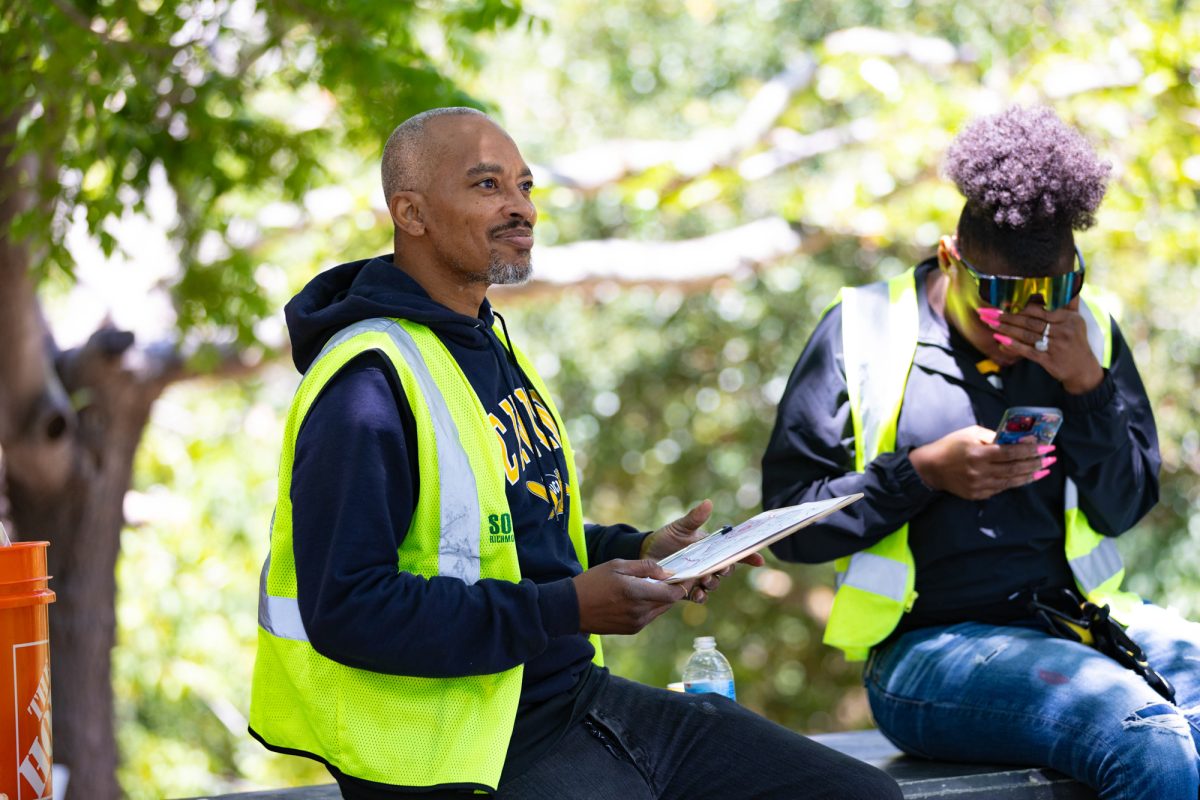
That changed after Adams joined a pilot program teaching unhoused residents ecological literacy and creek restoration. It’s a novel approach to addressing the environmental harms brought on by the growing number of people setting up camp along creeks and canals as homelessness surges in California.
The eight-week program was put on this summer by the Contra Costa Resource Conservation District, the nonprofit Safe Organized Spaces Richmond and a pair of researchers. It’s part of a larger study examining the intersection of homelessness, climate change, and urban streams across the Bay Area’s nine counties.
The researchers estimate 10% of California’s unhoused population — about 18,700 people — lives along waterways. In the absence of enough affordable housing and shelter, it feels like the best of bad options for many.
Read more at KQED.